
US visa interview questions
The interview is short, and most of it is the same handful of questions. Here is each one as the officer asks it, what they are actually checking, and what the State Department or the embassy says about answering it.
11 questions
Find the one you are worried about
The questions come in four groups, and they are mostly one question asked four ways: are you coming back. Pick the one keeping you up.
The trip itself
What brings you home
The rule behind all nine
Why the officer asks any of this
A US visa application starts from the assumption that you intend to stay
The officer does not start from neutral. The law tells them to assume you intend to stay, and the burden is on you to show otherwise. That is why almost every question is a way of asking the same thing: what brings you back.
Every alien [ … ] shall be presumed to be an immigrant until he establishes to the satisfaction of the consular officer, at the time of application for a visa [ … ] that he is entitled to a nonimmigrant status.
Where you are going, for how long, and what you will do there.
The trip itself
 EP 2“How long will you stay?”A 10-year visa is not a 10-year stay. The State Department says the expiration date on your visa "does not reflect how long you are authorized to stay." The CBP officer at the port of entry decides that, each time you travel. Stay past that date and the visa is voided, and you may be ineligible for future visas.Read the answer
 EP 4“Why do you want to visit the US?”The US Embassy in India warns that when a consultant coaches the interview, "every client from a particular consultant sounds exactly like one another." It says this "diminishes credibility among those who memorize the 'correct' answers and cannot hold free-flowing conversations with visa officers."Read the answer
 EP 7“When are you planning to travel?”Tell the officer your plan: roughly when, and for how long. Don't buy the tickets yet. The State Department says plainly: "There is no guarantee you will be issued a visa. Do not make final travel plans or buy tickets until you have a visa."Read the answer
 EP 8“What will you do in the US?”Visiting your children is a reason to go. Helping at their motel, store or gas station is not, even without pay. The State Department says: "An individual on a visitor visa (B1/B2) is not permitted to accept employment or work in the United States."Read the answer
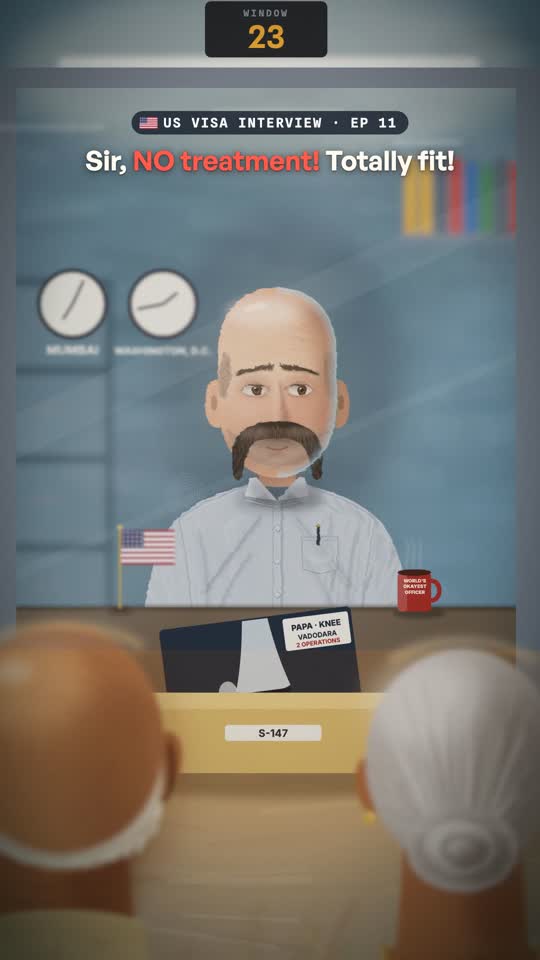 EP 11“Is this trip for any medical treatment?”The State Department lists medical treatment as a reason you can visit on a visitor visa. The mistake is hiding it. If your trip includes treatment, the consular officer may ask for:Read the answer
Where the money comes from, and whether it is really yours.
Who is paying
 EP 3“Who is paying for your trip?”Your son in the US can pay for the trip. The State Department says another person may cover some or all of the costs. But you qualify on your own ties at home, "rather than assurances from U.S. family and friends." It also says a letter of invitation or Affidavit of Support "is not needed" and "is not one of the factors used in determining whether to issue or deny the visa."Read the answer
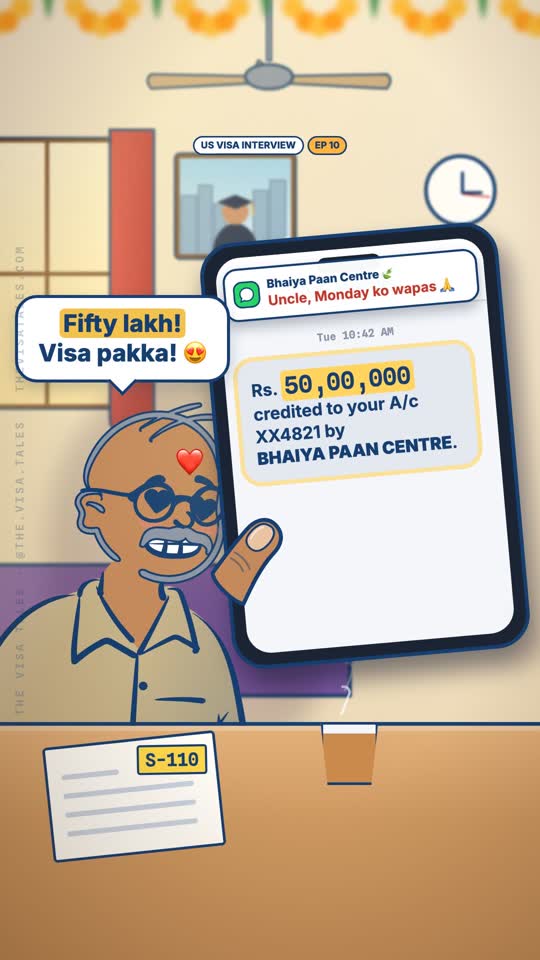 EP 10“Can I see your bank statement?”If an agent offers to put money in your account for the interview, say no. Money that isn't yours is false information, and the U.S. Embassy in India says: "Intentionally submitting false information either on the application itself or during the visa interview can lead to a finding of a permanent ineligibility."Read the answer
The part the whole interview turns on: why you are coming back.
What brings you home
 EP 5“How many children do you have?”The US Embassy in India says some consultants "encourage parents wishing to visit U.S.-based children to lie about the number or location of their other children." It says applicants have been "found permanently ineligible for visas because they provided false information during interviews."Read the answer
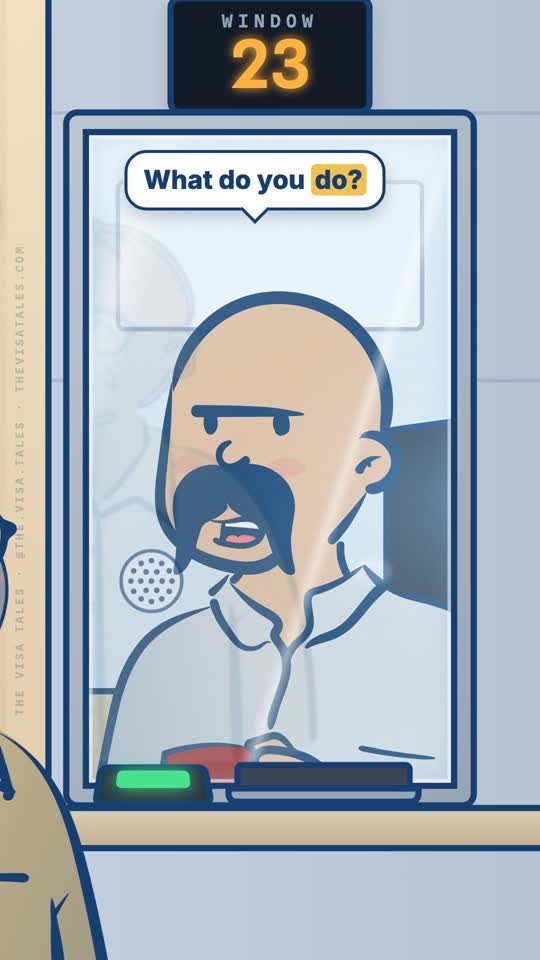 EP 9“What do you do?”Being retired is fine. Telling the officer you're "fully free" and your son says to stay as long as you like is not. The State Department says: "Visa applicants must qualify based on their ties abroad/to their home country, rather than assurances from U.S. family and friends."Read the answer
Earlier refusals, and who you know in the US.
Your history
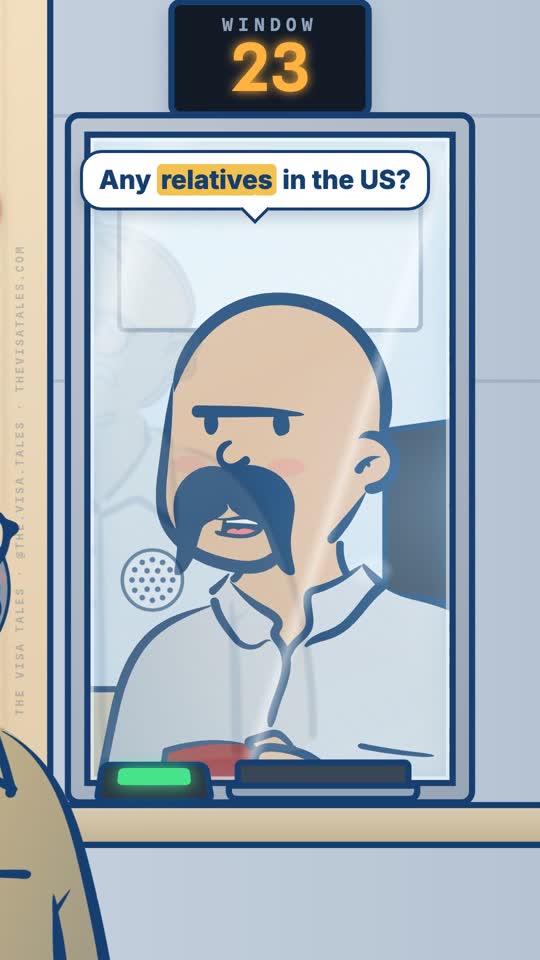 EP 1“Any relatives in the US?”Visiting your son or daughter is a normal reason to apply for a US visitor visa. The State Department lists "visit with friends or relatives" as a B-2 purpose. The risk is in hiding them. The DS-160 FAQ warns that false or misleading statements "may result in the permanent refusal of a visa." So answer the question you're asked, truthfully, and then stop.Read the answer
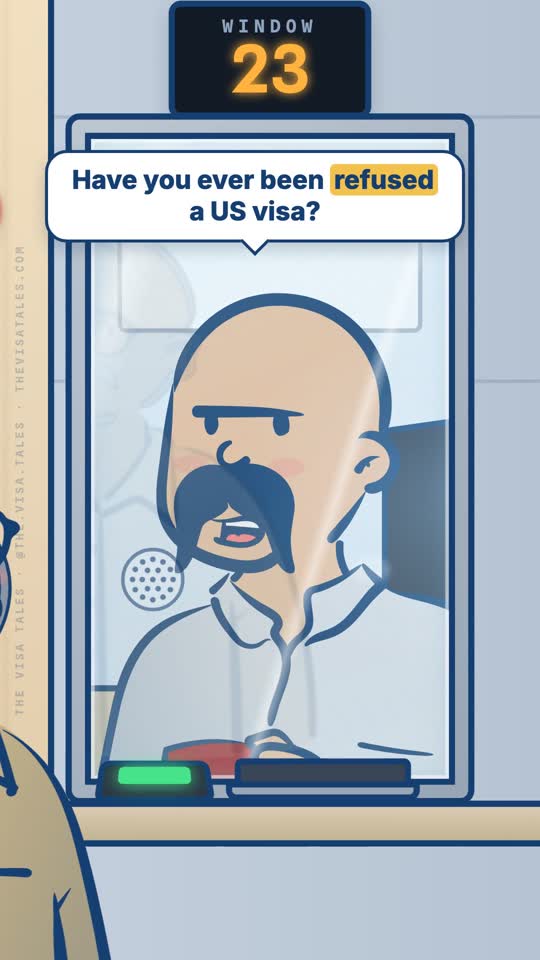 EP 6“Have you ever been refused a US visa?”If you were refused before, say so. The US Embassy in India warns that intentionally giving false information "on the application itself or during the visa interview can lead to a finding of a permanent ineligibility."Read the answer
Before the window
Where you will be interviewed, and how long the wait is
The interview itself is a few minutes. Getting to it is the long part, and it depends on which post you book. These are the current waits for a visitor visa appointment, read off the State Department's own tracker on 21 October 2026.
| Consulate | Next appointment | Typical wait |
|---|---|---|
| Mumbai (Bombay) | 12 Months | 12.5 Months |
| New Delhi | 11 Months | 7 Months |
| Hyderabad | 10.5 Months | 10.5 Months |
| Kolkata | 8.5 Months | 8.5 Months |
| Chennai (Madras) | 7.5 months | 7.5 Months |
From the same window
The specials
“How long will you stay?”
Even Ravan thought a ten-year visa means a ten-year stay. It doesn't. The State Department says the expiration date on your visa "does not reflect how long you are authorized to stay." The CBP officer at the airport decides that, each time you enter.
Before the interview
The interview is the last step, not the first. What the fees are, how long the wait runs at each consulate, and what the DS-160 asks for are all on the visitor visa page.
The US visitor visa, in full